The truth about stretch marks. Why 90% of women get them. Why the creams in your bathroom haven't worked for decades. And the 12-week protocol dermatology finally agrees on.







- Up to 90% of women develop stretch marks at some point in their lives.
- The cause isn't dry skin, low water intake, or "just genetics". It's a specific type of structural damage in the deeper layer of your skin.
- Decades of creams, oils, and butters have all missed the layer where the problem actually lives.
- Peer-reviewed research now supports a very different, dual-action approach that both fades stretch marks and rebuilds the skin's underlying structure.
Ninety per cent of women reading this have looked in a mirror at some point and quietly wondered why their skin looks the way it does. Not with alarm. Not with despair. Just a quiet, private wondering.
Some are looking after a pregnancy. Some after months of intentional weight loss. Some after a summer where they built more muscle than they expected. Some in the middle of a menopause that has changed the skin they've had for forty years. Some are teenagers who grew four inches in a year.
The lines are different in every case. But underneath every one of them, the same thing has happened. And almost no one has ever been told what it is.
Up to 90% of women develop stretch marks at some point. Not just during pregnancy. Not just after weight change. At some point.
Meg Gordon, co-founder of Striā Lab, puts it this way:
"We understand that stretch marks can be a source of insecurity, especially as 80% of women develop them during pregnancy. Looking in the mirror for the first time after giving birth was a stark reality check for us."
But the pregnancy statistic tells only part of the story. Ask a dermatologist and they'll tell you that stretch marks appear whenever the skin is pushed to change faster than the structural layer beneath it can adapt. That happens in more moments of a woman's life than most of us realise.

The mother
Sarah is 34. She had her second baby three months ago. Her body did what women's bodies have done for millennia: it stretched across two trimesters to make room for a child. The stretch marks appeared in the last six weeks of the pregnancy, as they do for around 80% of women. She's been told they'll fade. She's been told to be patient. What she hasn't been told is what's actually happening beneath her skin, or that there is anything she can actually do about it beyond hoping.

The transformation
Rachel is 42. She's lost nearly three stone over the past year, some through medication, some through discipline. The stretch marks she thought had gone when she was heavier haven't gone at all. They've reappeared, more visible than she remembered them, on the skin that's now slack across her hips and stomach. Every compliment she receives about her weight loss lands slightly wrong. She hasn't found the language yet for what she's actually feeling.

The midlife shift
Julia is 53. She's ten pounds heavier than she was, but that's not really what's changed. Her skin has. Since perimenopause began, her body has quietly lost around 30% of its dermal collagen, mostly in the first five years. That's not a fringe statistic. That's the peer-reviewed dermatological consensus. Her skin has become extensible without being elastic. Stretch marks that faded twenty years ago are back. Some are entirely new.
Three women. Three different lives. One structural cause underneath all of it. To understand what stretch marks actually are, we have to go a layer deeper than any moisturiser has ever gone.
Stretch marks are not a skin problem. They are a structure problem.
Your skin has two functional layers. The one you can see is called the epidermis. It's thin, replaceable, and does mostly what most moisturisers are designed to influence: it holds water, sheds cells, and reflects light.
Underneath it sits the dermis. Thicker. Denser. Alive with collagen and elastin fibres arranged in a specific woven scaffold that gives skin its ability to stretch and rebound without permanent damage.
This is where stretch marks actually form. Not on the surface. In the scaffold.
When your skin is pushed to change faster than the dermis can adapt, those collagen and elastin fibres tear. In some places they break completely. In others they realign into flat, parallel bands running in the direction of the stretch. When you see a stretch mark, you're not looking at a discoloured patch of surface skin. You're looking down through a thinned, collapsed epidermis at the structural damage underneath.
This is why they never look like other kinds of marks. They're slightly indented. Slightly translucent. Fresh ones are pink or purple because the damaged tissue underneath is showing through. Older ones fade to silvery-white because the tissue has scarred without regenerating.
And this is why no oil, no butter, no hyaluronic acid, no vitamin E, no matter how expensive or organic or well-marketed, has ever addressed them at their source. All of those interventions work on the epidermis. Stretch marks live in the dermis. They are two different problems, in two different layers of skin, that have been mistakenly conflated in beauty marketing for the best part of a century.

Every woman knows the ritual. Almost no woman knows why it never worked.

Open the bathroom cabinet of most women over 30 and you'll find some combination of the same things: cocoa butter, Bio-Oil, a small bottle of vitamin E, perhaps a rose-hip oil, perhaps something from Palmer's if she was pregnant. Almost every woman has bought at least one of these things at some point in her life, applied it faithfully for weeks, and quietly concluded that it hasn't done very much.
She's right. It hasn't.
Not because the products are bad. They're not. Cocoa butter is a lovely emollient. Bio-Oil is a well-formulated skincare oil. Palmer's smells reassuring and has genuinely helped generations of women feel better about their skin during pregnancy.
The reason these products haven't fixed stretch marks is much simpler, and it's the reason we started this piece. They live on the surface of the skin. Stretch marks live several layers underneath.
Even Bio-Oil, the most clinically-tested product in this category, publishes its own study numbers openly. Around half of users see improvement at 8 weeks. Nearly one in five see none at all. This is not marketing failure. This is a product operating on the epidermis, being asked to solve a problem in the dermis. It cannot reach where it would need to reach to make a real structural difference.
For a hundred years, the entire high-street stretch mark category has been aimed at the wrong layer of skin. The women who have used these products faithfully and been disappointed are not the problem. The products were never designed to do what women hoped they would.
Two peer-reviewed interventions changed what dermatology recommends. Both of them work at the dermal layer.
For the past twenty years, two separate lines of peer-reviewed research have quietly been changing what dermatologists actually recommend for stretch marks.
The first is a plant-derived active called TECA, short for Titrated Extract of Centella Asiatica. In clinical trials on postpartum women, formulations containing TECA have been shown to reduce the formation of new stretch marks by nearly half, and to reduce the visible size of existing stretch marks by up to 40%. Unlike surface emollients, TECA has been demonstrated to reach the dermal layer where the structural damage lives. It supports the fibroblasts responsible for producing new collagen. It's one of the few ingredients in the entire skincare industry with peer-reviewed evidence for this specific problem.
The second intervention is microneedling. Also called collagen induction therapy. It uses precisely-controlled micro-channels, around 1.5mm deep, to create controlled micro-trauma in the dermis. The skin responds by triggering its natural wound-healing cascade, which produces new collagen and elastin in the treated area. Histological studies have documented up to 400% increases in collagen deposition after several months of consistent use.
For years, dermatologists have observed something interesting: these two interventions, when combined, appear to produce results neither achieves on its own. TECA feeds the fibroblasts with the biochemical support they need. Microneedling gives those fibroblasts a reason to produce new tissue in the exact area where the damage is. One is biochemistry. The other is mechanism. Together, they finally address the structural cause.
This combination has been used in aesthetic clinics for years, at prices most women can't sustain. What has changed in the past three years is that the same protocol is now available as an at-home routine, at a fraction of the cost, without any loss of clinical integrity.
That's the shift. Not new marketing. Not a new emollient. Not a new oil with a new fragrance. A genuine dermatological consensus that stretch marks are a structural problem, and that structural problems require structural interventions.
"I've been treating stretch marks for over a decade now, and I can tell you no other product gives these results."
The two women who built this because nothing else worked.
Striā Lab was co-founded by Meg Gordon and Madeline Rush. Both women had built careers in the beauty industry before they had children. Both developed stretch marks in their first pregnancies. And both found themselves in the strange, quiet, mostly-unspoken position that so many new mothers know well.
They were told to be body positive. They were told the marks would fade. They tried the creams. They tried the oils. They read the articles. And nothing quite fitted the private conflict they were actually experiencing, which was that they loved their new babies, they respected their new bodies, and they still wished the marks weren't there.
"Looking in the mirror for the first time after giving birth was a stark reality check for us. We believe everyone should be given the choice of how to approach their own body care."
Working with their scientific and dermatological network, they spent years developing a protocol built on the peer-reviewed research they kept coming back to. TECA delivered through a properly-formulated cream. A serum designed to be applied alongside microneedling. A tool designed to be used at home, safely, without a clinic. All of it in a twelve-week routine. The Programme is the productisation of what they wished had existed when they needed it.







The 12-Week Programme. Three components. One dermatological system.

The Cream
Apply twice daily. TECA at 1%, the clinically-studied concentration. Actigym at 5% for body-contour support. Formulated to reach the dermal layer. Suitable during pregnancy and breastfeeding.
The Serum
Apply once a week, before microneedling. Combines TECA with Triple Hyaluronic Acid and Hydrolysed Collagen to support the deeper skin response.
The Microneedling Tool
Once a week, after the serum. 1.5mm titanium needle depth, matched to the depth at which stretch marks actually form. Roller head is replaceable and hygienic. Not for use during pregnancy.
The three components are designed to work together. The cream delivers active TECA to the dermal layer daily. The weekly microneedling session activates the skin's regeneration response. The serum, applied immediately before the tool, doubles the active concentration in the area you're actually working on. This is the dual mechanism dermatology now agrees on, in an at-home routine that takes 12 weeks.
This is what a properly-designed protocol looks like on real skin.
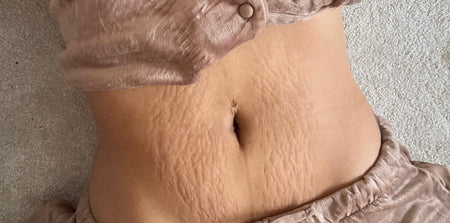
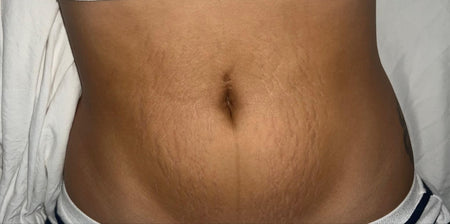
I have been using these products for around 3 months now and I am amazed! I genuinely thought there was no saving my stretch marks but my picture I have shown speaks for itself ! I will continue to use these products and recommend to anyone who has stretch marks !!!


It’s like I’ve had a visible lift. Definitely getting more to continue this journey to body confidence.
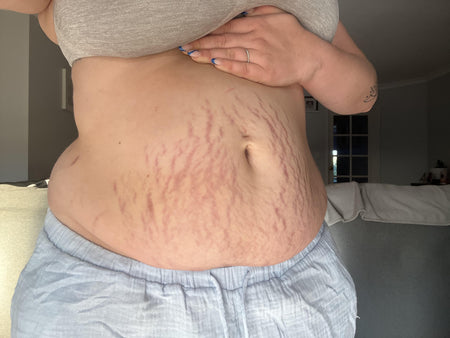
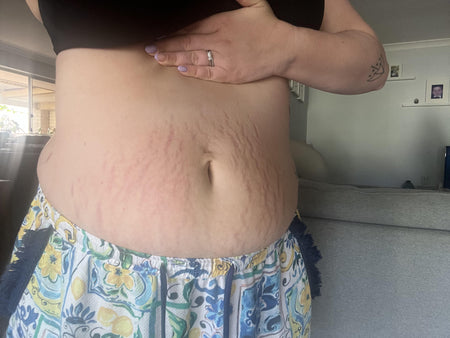
I have only been using this product for 11 days and can already see a difference! So happy with it!
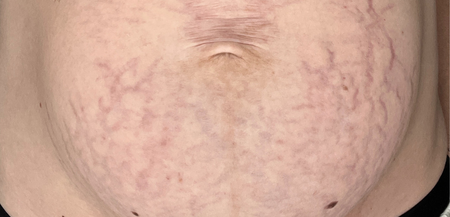
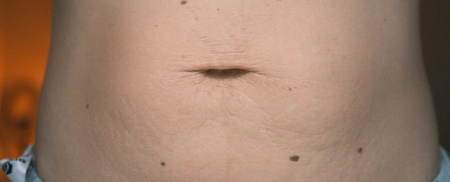
After my first baby it took a while to come to terms with my new body, but this gave me my confidence back!
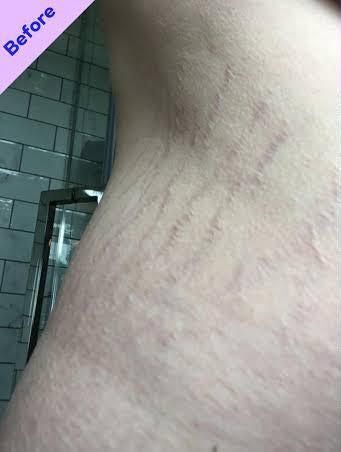
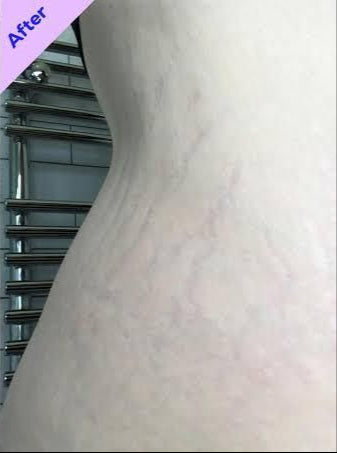
This cream changed my life i have tried every over the counter products including bio oil to no avail and i stumbled upon this cream it has been a game changer my stretch marks are barely noticible now
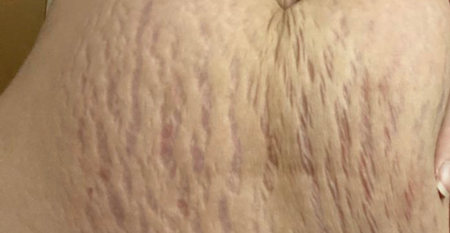
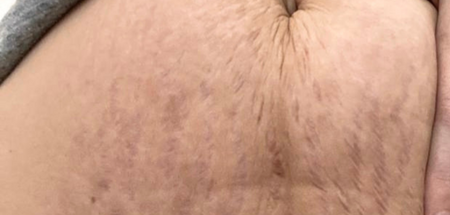
After 8 weeks, my stretch marks are much less dimply, and the colour is starting to fade. It took a month to really start to see a difference.
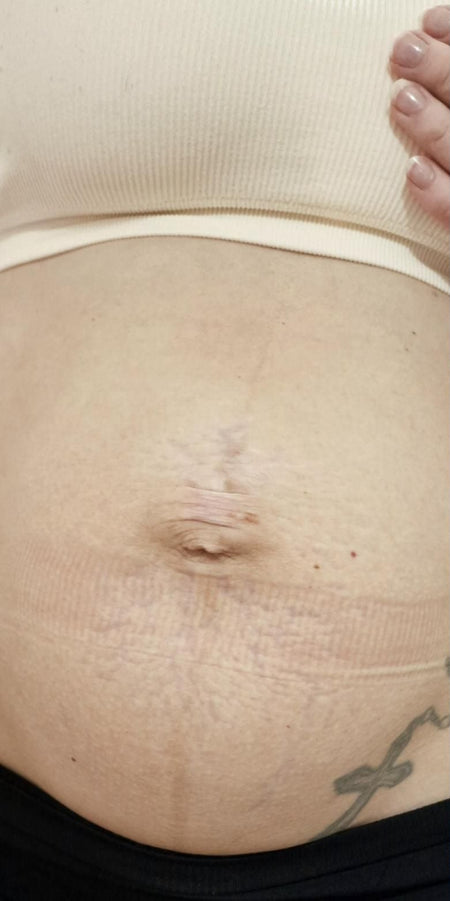
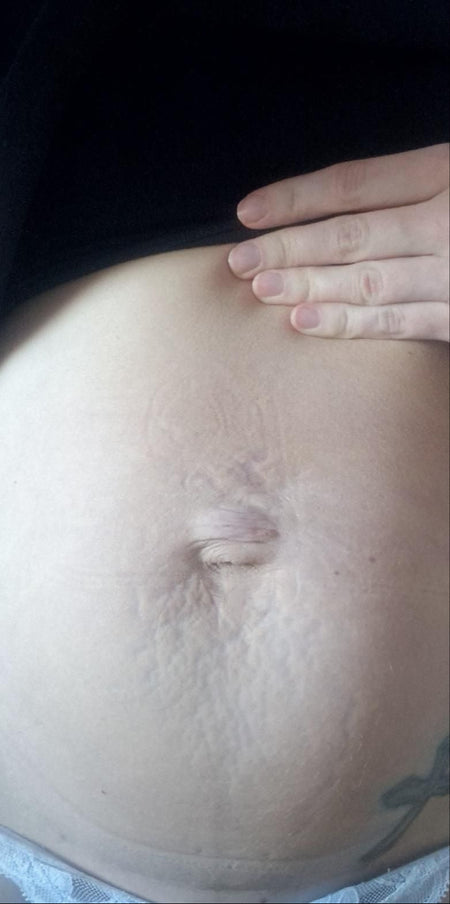
I am on week 3.5weeks into using this product and I can see a difference in the pigmentation of the stretch marks on my stomach. They are not as purple as they were and definitely more reduced I started using this only 2 weeks after giving birth so my stomach is, as expected, still recovering and this is my second child. I have noticed that my stomach is tightening faster this time round
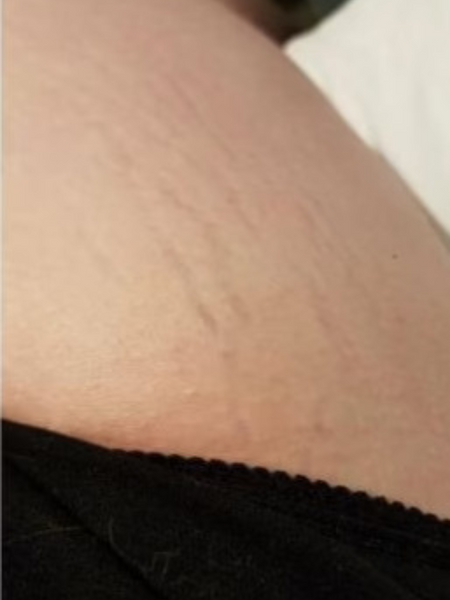
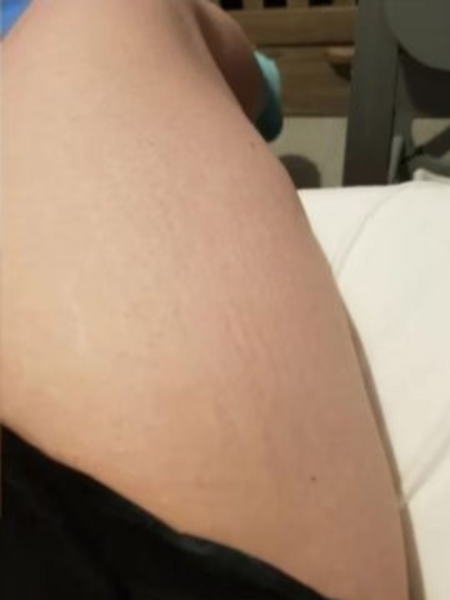
This is the same leg. In the same position. Photos taken one month apart. I actually cant believe the results! I’ve been using the kit religiously as instructed and it works amazing. Over Summer I haven’t wanted to get in my bikini because of my stretch marks, but now I’m much more confident! Thanks you so much Strialab! I will be telling all my friends!
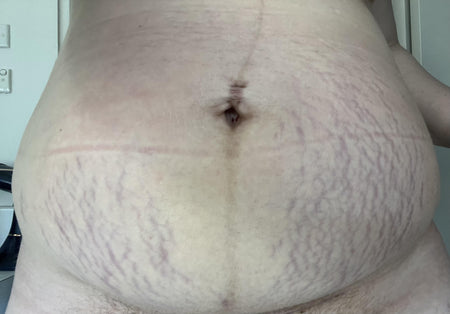
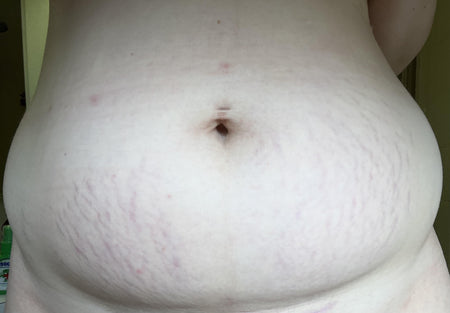
I’ve been using this cream twice daily for the last 4 or so months an d have definitely seen visible improvements on my stretch marks. I have also been using the microneedle roller more frequently than recommended, around 2-3x week which I think has helped. Very happy with the progress so far.
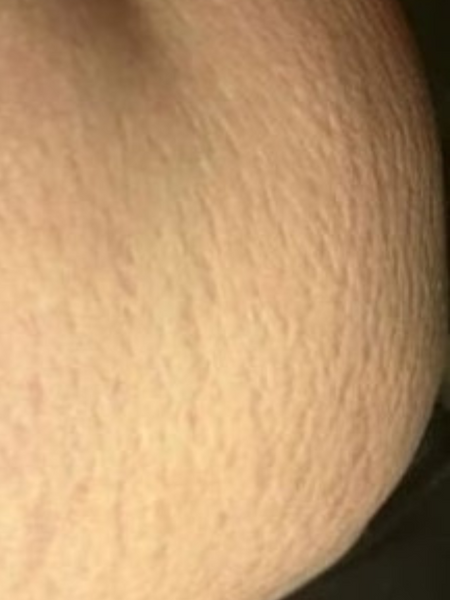
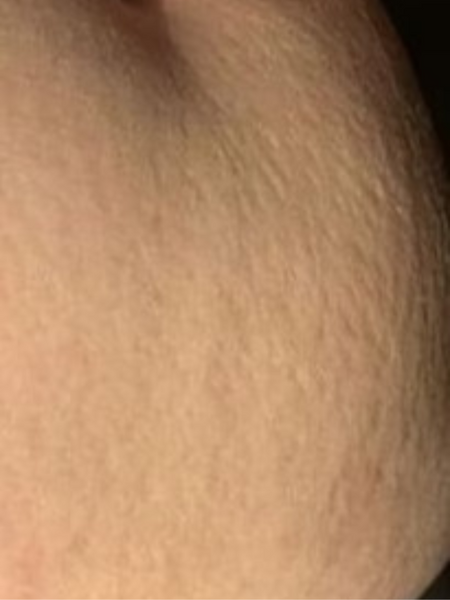
From the first time I used it I was instantly shocked at the results. I haven’t been great at being consistent with the product but have been hugely impressed with the difference it’s made regardless. I recommend strialab to all of my other mummy friends.
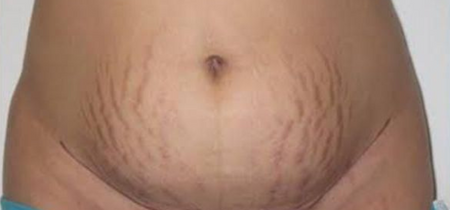

Loved it only used for 2 weeks and already can see my marks fading
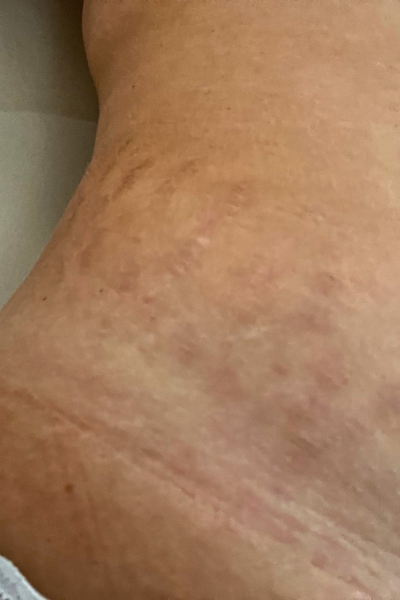
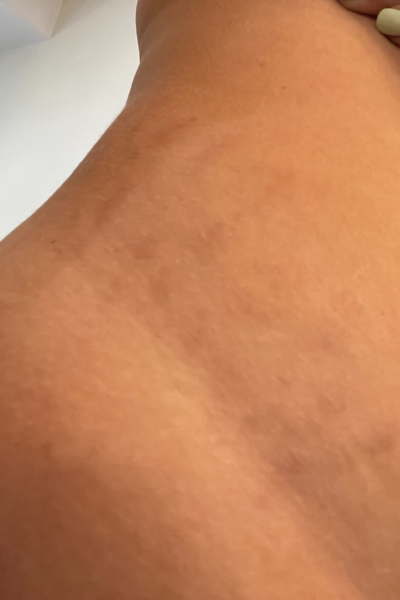
I treated the red stretch marks on my hips which were really noticeable in a bikini. After one month, they’ve faded so much and the skin looks much smoother
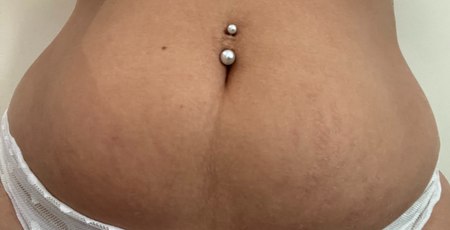
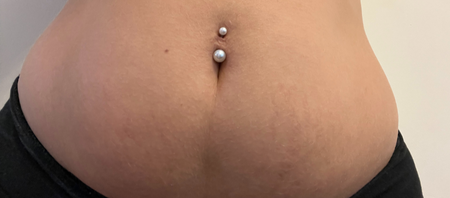
My marks healed quite well after pregnancy, but then stopped getting better. I gave this a go and my skin is now much smoother and more
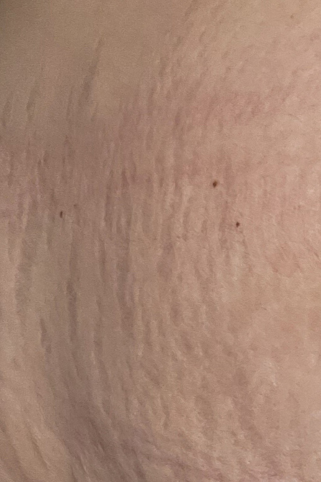
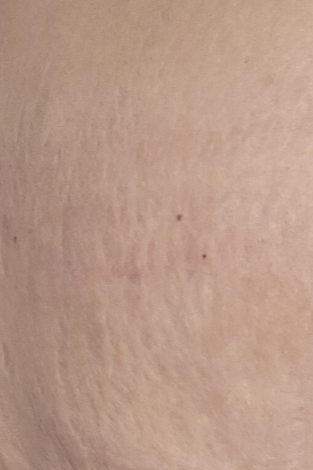
I would like to thank Strialab for treating my 20-year-old stretch marks and firming tummy. I am 61 and thought I was well passed anything changing.
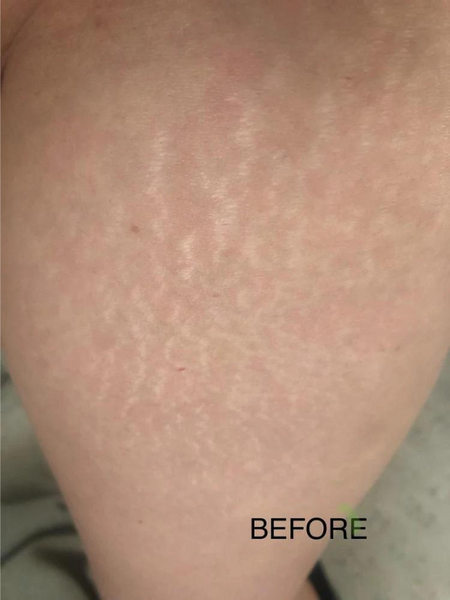
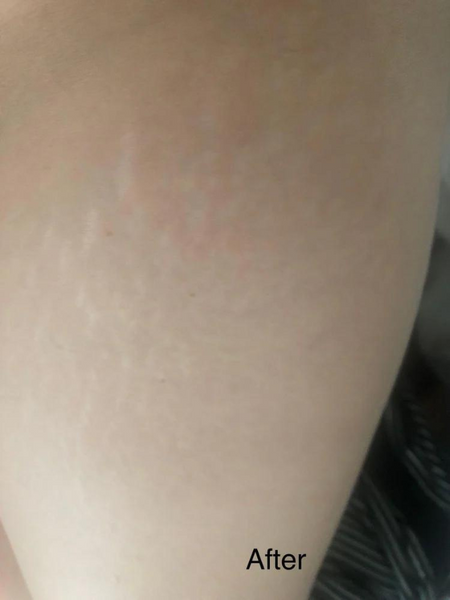
Been using Stria Lab Stretch Mark Cream for three months now. The difference is amazing. My stretch Marks are less prominent almost half disappeared or have shrunken in size. My thighs are more firm and skin tone are more even. What a game changer.
The 12-Week Stretch Mark Repair Programme.
- ✓Redefining Cream (twice-daily, TECA + Actigym)
- ✓Cellular Repair Serum (weekly)
- ✓1.5mm Microneedling Tool (weekly, replaceable head)
- ✓Free Collagen X Mini gift on first order (worth £15)
- ✓Free UK shipping on every order
- ✓Cancel or pause anytime
Everything women ask before starting.
Will this work on my type of stretch marks?›
The Programme addresses stretch marks by treating their structural cause: damaged collagen and elastin in the dermal layer. This is true whether your stretch marks are recent and red, older and white, from pregnancy, from weight change, from menopause, or from any other cause. Newer stretch marks tend to respond more quickly. Older marks take longer but continue to improve with consistent use.
How long until I see results?›
Most customers report visible changes within 4 to 6 weeks of consistent use. The full protocol runs for 12 weeks, which is the minimum time frame supported by the peer-reviewed research on both TECA and microneedling. Beyond 12 weeks, results continue to improve with continued use.
Is it safe to use during pregnancy or breastfeeding?›
The Cream and Serum are formulated to be safe during pregnancy and breastfeeding. They exclude retinoids, phthalates, and parabens. The Microneedling Tool should not be used during pregnancy. We recommend waiting until you are postpartum before introducing the microneedling step.
Can men use this?›
Yes. Stretch marks form through the same structural process regardless of gender. The Programme is used by men and women.
What if it doesn't work for me?›
Every Programme comes with a 12-week money-back guarantee. Use the Programme as directed for the full 12 weeks. If you're not happy with your results, email hello@strialab.com with your order number and we refund your purchase in full, no questions asked.
Can I use this alongside other skincare?›
Yes. The Programme is designed to work as a self-contained system. You can continue your existing face skincare, hair care, and body care routines. On the days you use the microneedling tool, we recommend allowing the serum to absorb for 30 minutes before applying anything else to the treated area.
One decision. One protocol. Twelve weeks.
For most women, this is the first product they've ever tried that was actually built for what's happening in their skin, at the layer where it's actually happening. If you've read this far, you already know more about stretch marks than 95% of the people who've ever tried to sell you a solution.
Start the 12-Week Programme →