Weight changes, growth spurts, muscle gain, hormones, and genetics all play a role. Pregnancy is only one of many triggers.

Stretch marks develop in the dermis, the deeper layer of skin. That's why basic moisturisers that only hydrate the surface often fall short.

Early stretch marks appear red or purple and are generally more responsive. Supporting collagen and elasticity earlier leads to more noticeable improvement over time.

Clinical studies have shown cocoa butter does not significantly prevent or improve stretch marks once they’ve formed. It can help with hydration and comfort – but not structural repair.

Some skin types are simply more prone to stretch marks due to collagen structure. This is biology, not something you caused.


I have been using these products for around 3 months now and I am amazed! I genuinely thought there was no saving my stretch marks but my picture I have shown speaks for itself ! I will continue to use these products and recommend to anyone who has stretch marks !!!


I have only been using this product for 11 days and can already see a difference! So happy with it!


It’s like I’ve had a visible lift. Definitely getting more to continue this journey to body confidence.


After my first baby it took a while to come to terms with my new body, but this gave me my confidence back!


This cream changed my life i have tried every over the counter products including bio oil to no avail and i stumbled upon this cream it has been a game changer my stretch marks are barely noticible now


After 8 weeks, my stretch marks are much less dimply, and the colour is starting to fade. It took a month to really start to see a difference.

Among the most studied are tretinoin (a prescription retinoid) and TECA, a science-backed Centella extract shown to support skin repair and collagen activity beneath the surface.

Microneedling activates the skin’s natural repair response and improves delivery of topical actives. Studies have shown it can be more effective than laser treatments for improving stretch marks.

Using the right formula daily for weeks beats aggressive treatments you can’t maintain. Skin remodelling responds to repetition, not extremes.

Consistent at-home care can activate the same repair pathways more gradually. Topical formulas with clinically studied actives like TECA can support renewal beneath the surface without downtime.

Acceptance matters – but so does having options. With the right tools and consistency, the look and feel of stretch marks can meaningfully improve over time.

The 12-week clinical system that works beneath the surface — not just on it.
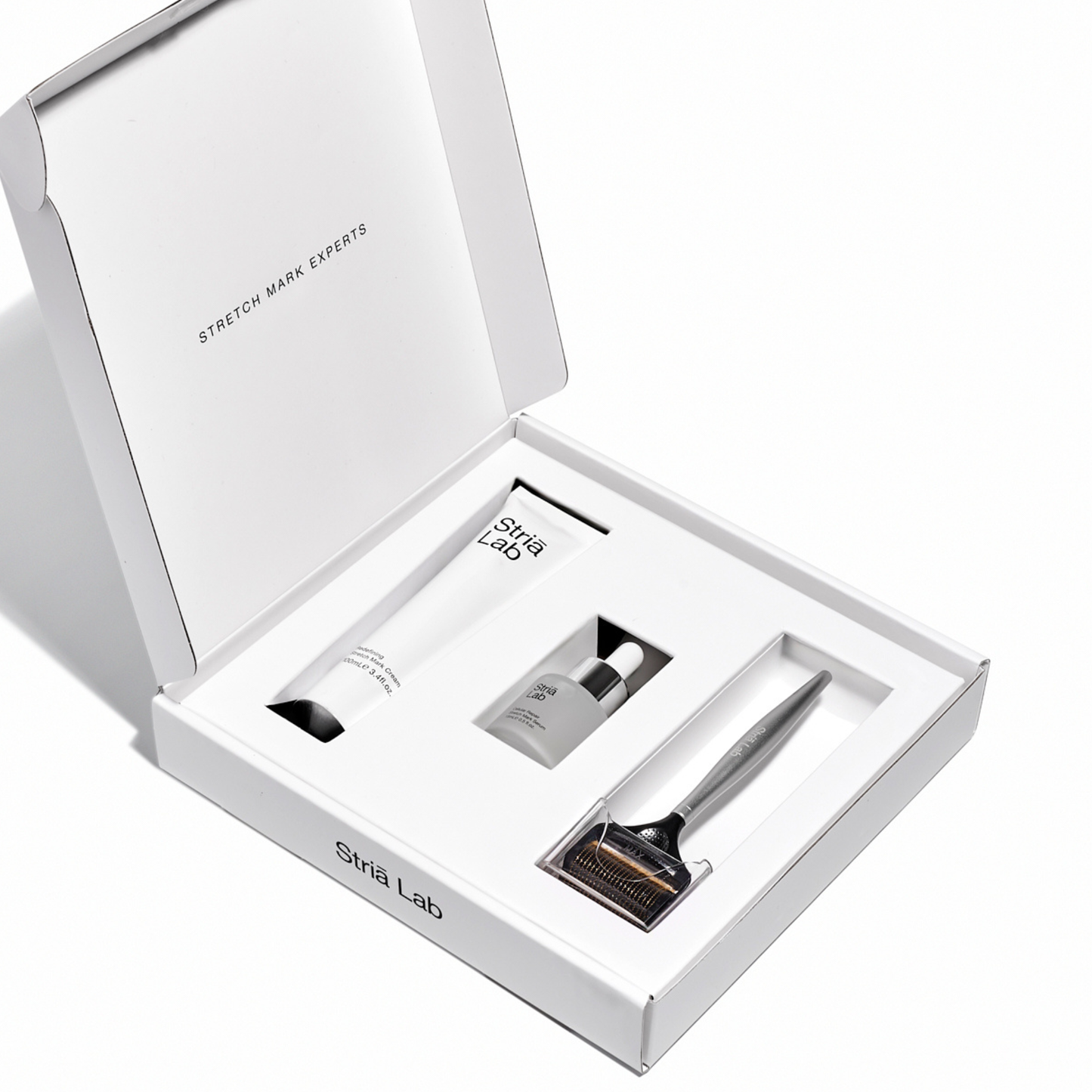
The gold standard two-part system. Targets stretch marks in the dermis — where they actually begin. Everything you need for the full 12-week transformation.
 3 × Redefining Stretch Mark Creams
FREE Microneedling Tool (£34.99 value)
FREE Collagen X Defence Oil (£19.99 value)
3 × Redefining Stretch Mark Creams
FREE Microneedling Tool (£34.99 value)
FREE Collagen X Defence Oil (£19.99 value)
 Free shipping
 12-week Programme guarantee
 Independently verified